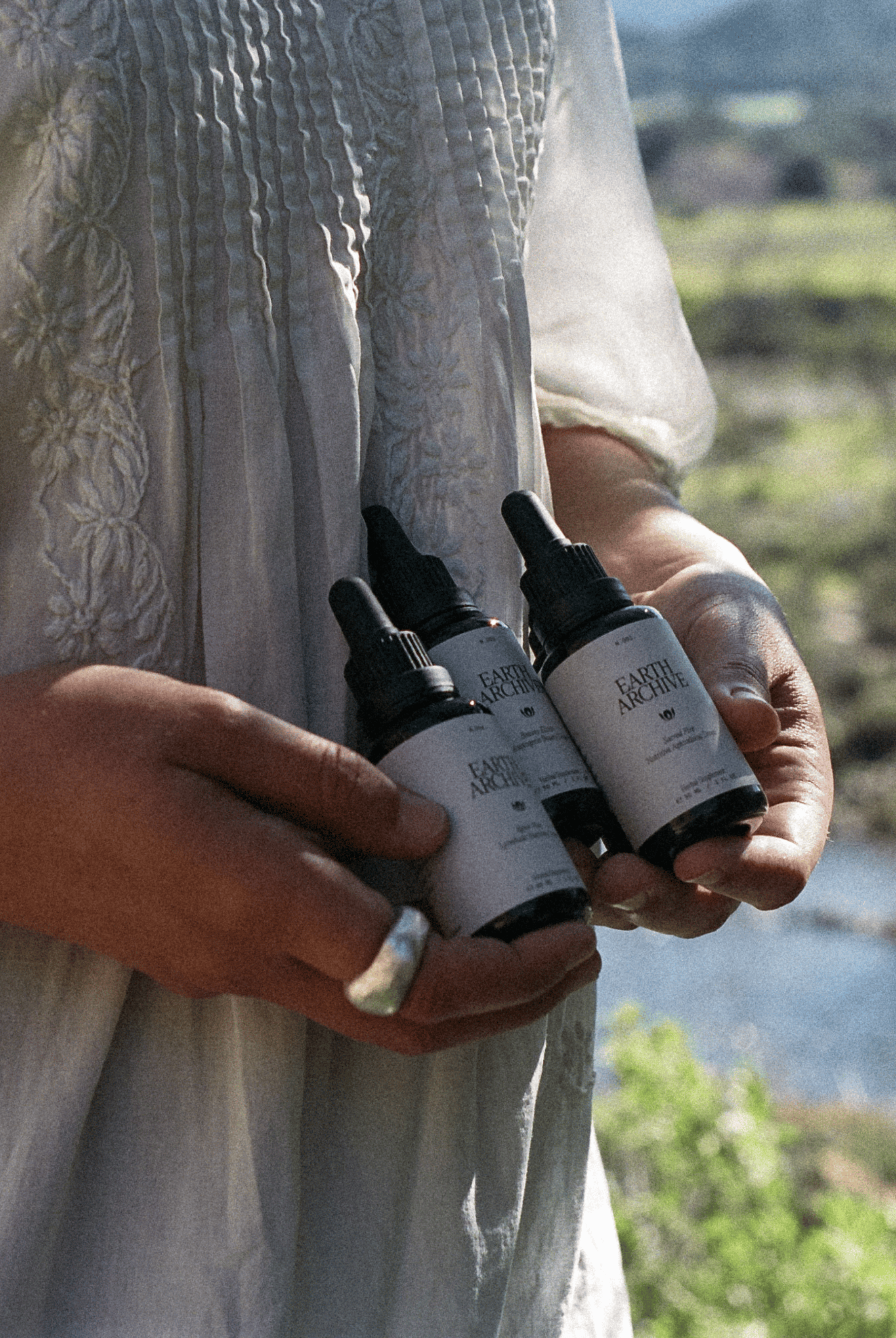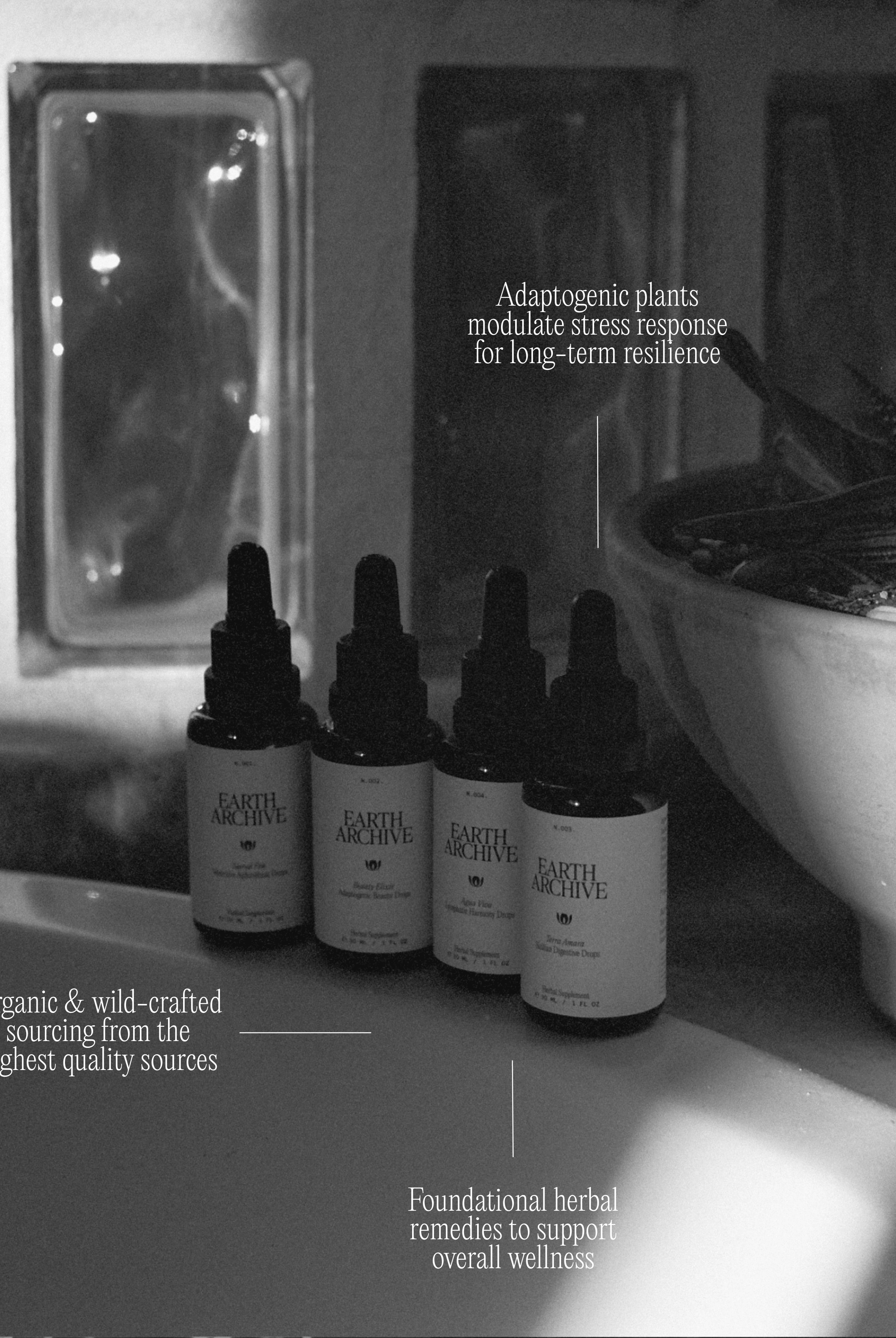


We approach our formulation philosophy from a holistic perspective that extends beyond selecting a few stand-out herbs to lead each blend and into every ingredient that brings the blend to life. Our elixirs are crafted through a dual-solvent extraction of organic alcohol and organic coconut-derived glycerin, each balanced with care for the unique role they play in creating the most potent herbal medicine.
This combination is intentional in capturing the fullest expression of each plant included in the blends. To understand why this matters, we have to look at a few things: how solvents extract plant compounds, why different herbs require different approaches, the quality of alcohol and glycerin solvents, and why we chose not to formulate alcohol-free, 100% glycerin-based tinctures.
Why We Combine Alcohol + Glycerin in One Extract
Plants by nature are extraordinarily chemically diverse, each containing hundreds of naturally occurring compounds. No single extraction method can capture the full expression of every herb in its entirety.
Some compounds naturally extract best in water (or water-based mediums, such as glycerin). Think: nutritive herbs, such as nettle leaf, that are often best enjoyed as long-steeped infusions, allowing for mineral-rich, water soluble compounds to slowly infuse into the tea. Some prefer alcohol. These would be your roots, barks, and aromatic herbs that contain bitters, alkaloids, and essential oils that are best consumed as tinctures. The majority of plants contain both water and alcohol soluble compounds that may reach their fullest expression with a dual-extraction approach.
How We Decide What Solvent a Plant Needs
When looking at the medicinal qualities of a plant, we look to preserve range and view an herb as containing layered biochemical and energetic systems that interact with the body with natural intelligence, rather than distilling them to single-compound medicines (the approach that allopathy and big pharma often when looking at an isolated compounds ability to treat dis-ease in the body).
This creates a balanced, multidimensional elixir that respects the full range a plant has to offer and is more about preserving the relationships between compounds rather than a reductionistic approach of isolating actives.
Herbs that prefer alcohol extraction
Alcohol has classically served as one of herbal medicine's most revered extraction mediums because of how effectively it can draw fourth alkaloid-rich constituents that exist in medicinally-rich plants like roots, barks, seeds, and fungi. These are plants where key compounds are more resinous, aromatic, or lipid-rich. Many herbs often require alcohol to fully express in a way that is largely inaccessible through water alone.
- Aromatic roots and barks
- Resinous herbs
- Plants rich in essential oils or alkaloids
- Bitter tonics and deep metabolic herbs
Herbs that prefer glycerin or water extraction
Water is a universal carrier of life. It excels at drawing forth the nourishing, mineral-rich, hydrophilic constituents of plants, like the medicine of leaves, flowers, and fruits. These are plants whose actions are primarily soft, mucilaginous, or polysaccharide-based.
- Soothing demulcents
- Flowers and gentle nervines
- Immune-supporting berries and fruits
- Tissue-soothing or hydrating botanicals
Preserving the Plant's Fullest Expression
Many plants exist in the middle range and contain compounds that benefit from both alcohol and water-based extractions. By combining the two solvents in the proper balance, the final blend can hold both the chemical depth from an alcohol extraction alongside the gentle, hydrating matrix of a water-based extraction. Plants that benefit from this approach include:
- Adaptogens
- Complex tonics
- Multi-system botanicals
- Herbs with both aromatic and nutritive profiles
Solvent Quality + Why We Choose Not to Formulate Alcohol-Free Tinctures
While many people seek alcohol-free tinctures, removing alcohol also removes access to many of the plant compounds that alcohol is uniquely capable of extracting. Historically, alcohol has been one of traditional herbal medicine's preferred methods of extraction across cultures. It's unique ability to capture the deepest medicinal constituents of a plant in ways that water-soluble compounds alone cannot, makes alcohol, from this perspective, a medicine in and of itself.
Our herbal remedies are crafted with a high-proof organic cane alcohol for a gluten-free base of the highest purity, and combine this with organic coconut glycerin. We choose coconut-derived glycerin over other glycerin sources used in most other herbal tinctures, as "vegetable glycerin" is a broad term for glycerin produced as a co-product of the industrial seed oil industry. These glycerin sources are often pro-inflammatory and sourced from a blend of industrial soy, canola, sunflower, or palm. You can read more about the importance of solvent quality and how we crafted our herbal elixirs with this in mind here.
While the plants are the heart of a formulation, the entire process from solvents, carriers, and methods of preparation shape the way in which a medicine is ultimately expressed. The frequency that a remedy carries is a holistic reverberation that extends beyond botanical chemistry and active compounds. True herbal medicine is about honoring the whole, of both plant and human, coming into relationship with one another in an intelligent way to bring coherence, vitality, and health, to body and being.